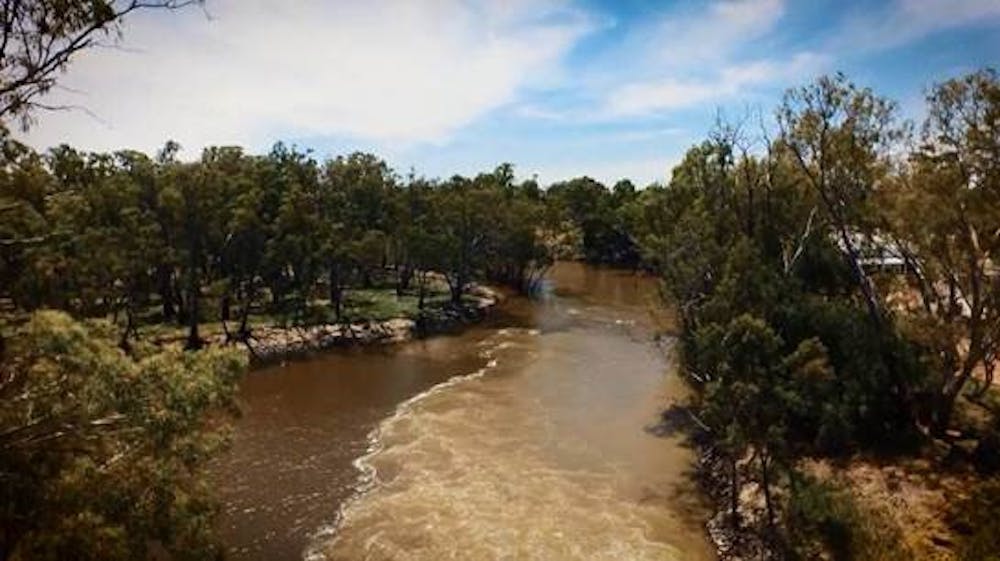
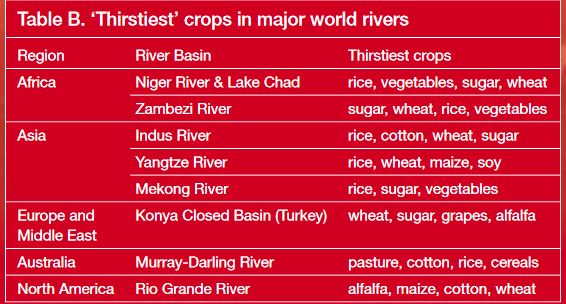
The Basin has 23 major rivers. Almost 4 million people rely on water from these rivers and catchments for the survival of their families, communities and industries. Animals and plants have evolved and adapted to the seasonal patterns of water flow through the Basin’s rivers
Most of the water in the Basin comes from the southern and western sides of the Great Dividing Range, flowing into the 23 major rivers, including Australia’s 3 longest, the Murray, Murrumbidgee and Darling rivers. High evaporation rates, expansive floodplains and significant water diversions for towns and agriculture mean that much of the surface water in the Basin does not reach the ocean.
It will take decades, but the Murray Darling Basin Plan is delivering environmental improvements (according to academics and vested interests)
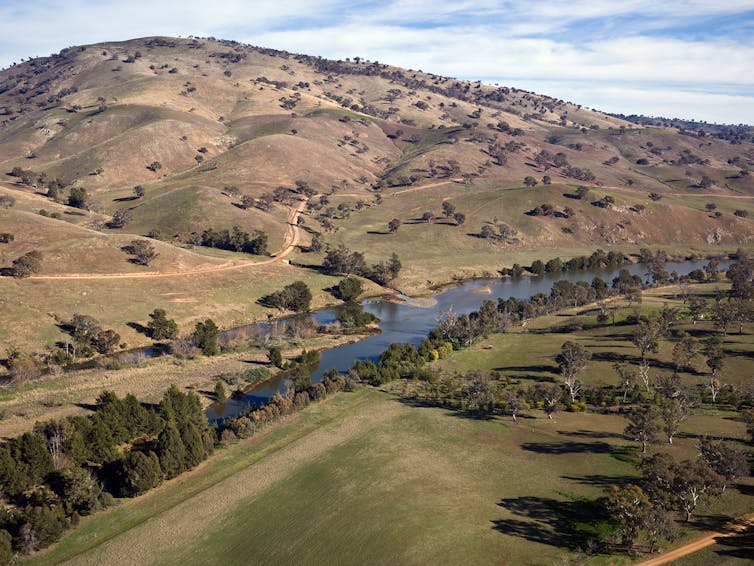
The Murrumbidgee River is one of several sites in the Murray-Darling Basin where improvements are being detected. CSIRO/Wikimedia Commons, CC BY-SA
Amid the politics, it’s sometimes easy to forget that the Murray-Darling Basin Plan was originally designed primarily to restore the rivers’ environment. While questions have been raised over the plan’s governance, economics, and political commitment by the states, it is important to note that, more than five years after the plan’s adoption, the environmental benefits are slowly but surely being seen.
The Long-Term Intervention Monitoring Project began in 2014 to monitor and evaluate environmental outcomes from Commonwealth environmental water – the water being delivered into the Murray-Darling Basin by the plan.
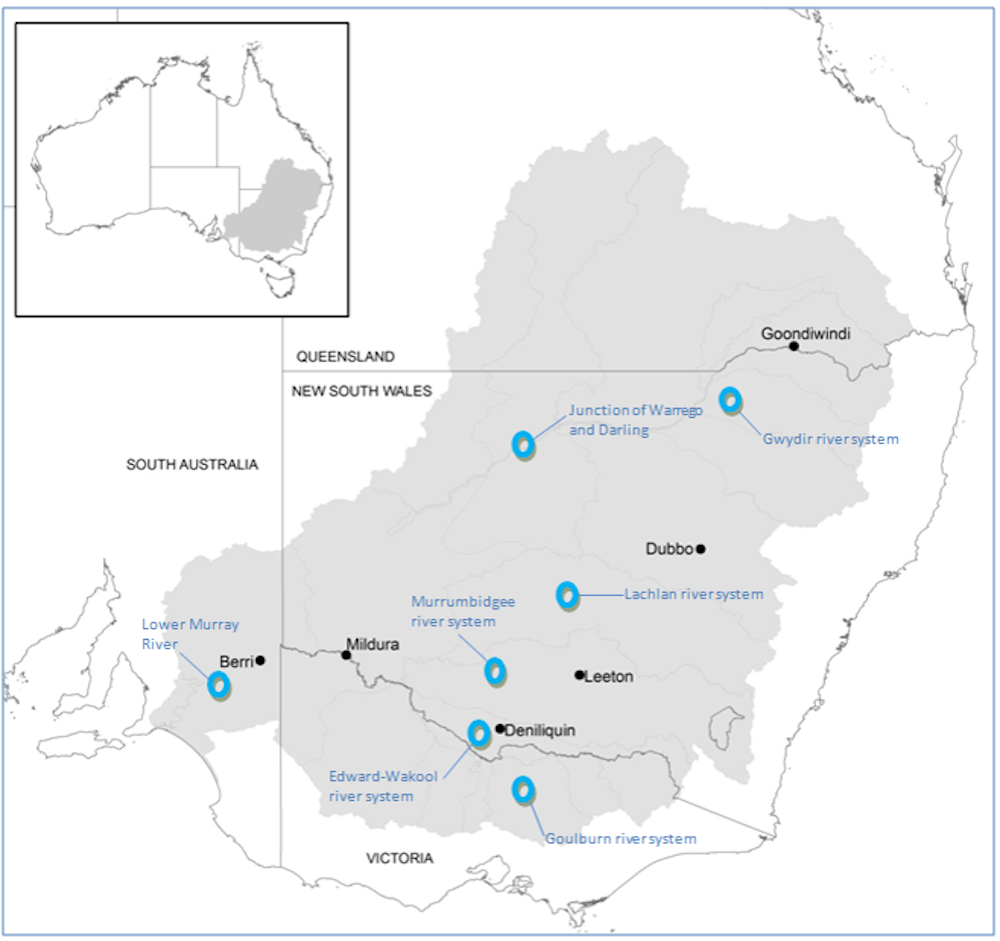
We are leading independent teams of researchers and consultants in monitoring seven selected areas across the Murray-Darling Basin, and then scaling up those results to deduce the health of the basin as a whole.
It’s not widely known what environmental water can and cannot do, and how different environmental indicators will respond at different rates. The Basin Plan’s objectives focus on fish, bird and vegetation communities – and in all of these areas, the changes will take time.
Under the plan, we expect that it will take more than a decade from the start of flow delivery before large-scale changes become evident. Detecting these changes will require both time and high-quality data.
What’s more, Commonwealth environmental water is a relatively small proportion of what once flowed through these systems. The government currently holds entitlements to 1,836 billion litres, which is less than 6% of average system inflows (the rainfall that makes it into the river system).
This is not enough water to restore natural flow patterns. Along with other constraints, such as the pressure to keep water off floodplains, this means that managers need to be extremely selective about where, when and how water is delivered for environmental benefits.
What are we monitoring?
While we are monitoring fish, birds and vegetation to allow us to measure progress towards the Basin Plan’s objectives, we are also monitoring shorter-term responses. These responses provide data on environmental processes that will allow us to predict whether we can expect the Basin Plan ultimately to deliver on the promised long-term improvements.
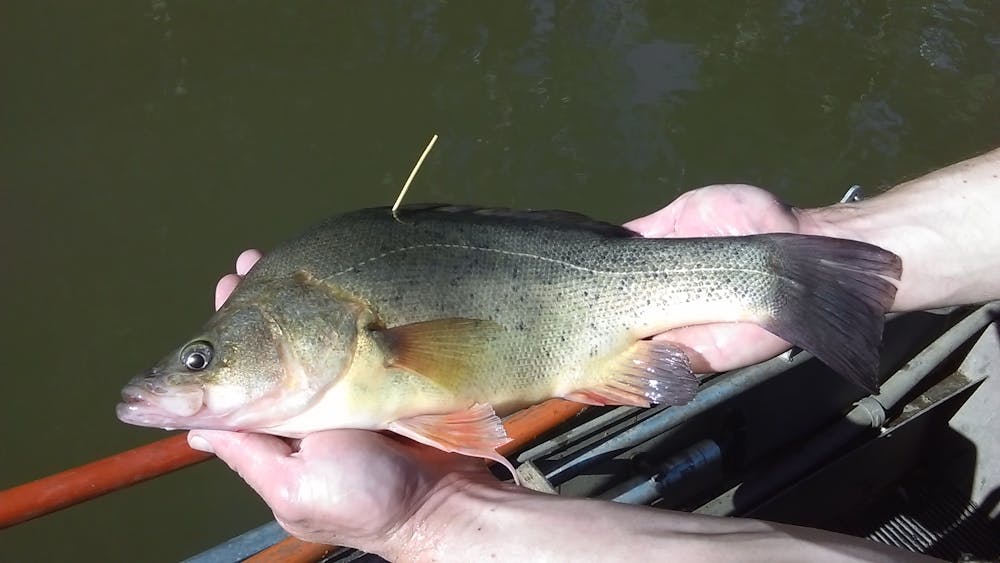
A good example of this is golden perch, a threatened and iconic native fish species in the Murray-Darling Basin. Long-term changes in the adult population will only be seen if shorter-term processes, such as migration and spawning, occur. Environmental water should help these processes, and we are monitoring those outcomes.
If environmental water is used to achieve all these processes, then over years to decades, we will see an increase in adult golden perch numbers.
Adult golden perch fitted with a tag to track its movements. Wayne Koster/Arthur Rylah Institute, Author provided
Quicker results
Not everything takes decades, however. We have already been able to detect some shorter-term benefits from the plan. Here are some examples from around the Basin:
Lower Murray: environmental water has reduced salinity in the Coorong and increased salt export through the Murray mouth
Edward-Wakool: environmental water has provided refuges for aquatic fauna during low-oxygen “black water” events caused by floods in 2010 and 2016, reducing impacts on fish populations
Warrego-Darling: environmental water has maintained flows in a system that would have otherwise dried to a series of isolated pools, maintaining food webs and stimulating fish breeding.
Alternative outcomes
Besides reporting progress, our monitoring program also allows us to make predictions of what the system might have looked like with different environmental flows, or with no environmental flows at all.
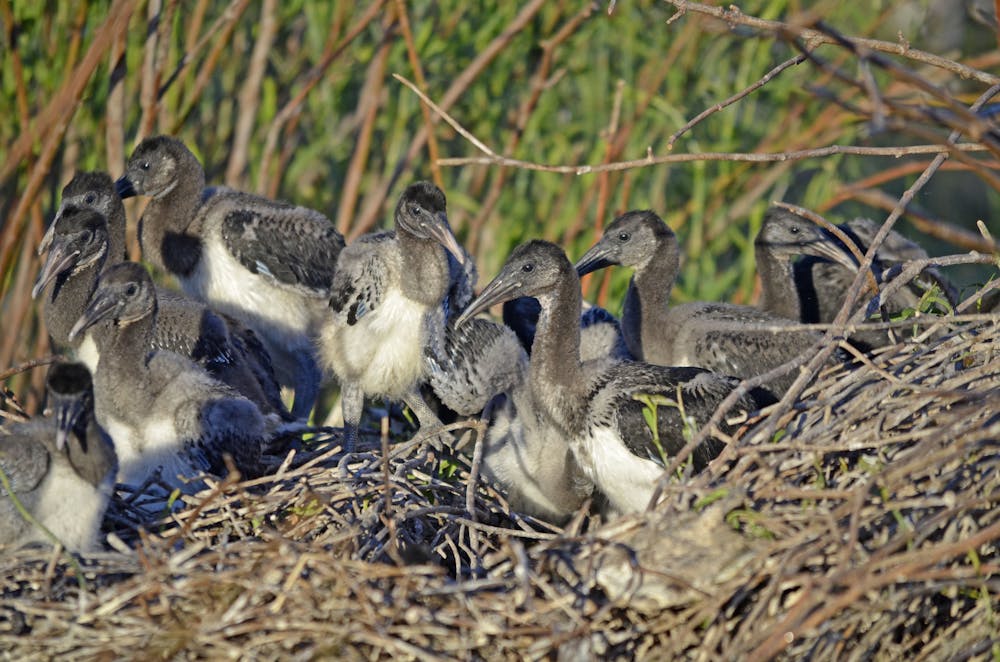
In the Lachlan River in New South Wales, environmental water has been used to support a major bird breeding event by extending the period of flooding. Without this water, nests would have been abandoned, leaving thousands of fledglings to die.
Straw necked Ibis chicks from the Lachlan River. Mal Carnegie/Lake Cowal Association, Author provided
We also share our results with environmental water managers to help improve the effectiveness and efficiency of environmental water delivery – a process called adaptive management. In the Goulburn River in Victoria, we have learned that the release of environmental water to help riverbank vegetation is more effective if delivered earlier in spring. Riverbank vegetation has now improved so much that metal pins being used to monitor erosion and sediment deposition can’t be found without a metal detector.
In it for the long haul
One criticism of the Basin Plan is that there is no evidence yet of basin-wide improvements. For some indicators this is to be expected because of the long time frames of response of the Basin Plan objectives. However, we have already reported on basin scale changes of other indicators, such as vegetation.
The politics of the Murray-Darling Basin Plan will probably always be fraught. But as the group charged with assessing environmental progress, we want the debate on its effectiveness to be underpinned by sound evidence from independent experts.
The Long-Term Intervention Monitoring Project, along with other research and monitoring, is providing that evidence.
So, while the Basin Plan’s objectives will take a long time to be realised, there are positive signs that it is slowly achieving its major goal of improving environments in the Murray-Darling Basin, underpinning more sustainable social, environmental and economic outcomes into the future.
This article was coauthored by Mark Southwell, Geomorphologist, Eco Logical Australia; and Shane Brooks, Director, LitePC Technologies.
Water resource plans will be regularly audited, prioritising areas of highest risk to ensure the outcomes of the Basin Plan are achieved. Audit outcomes will be published on the MDBA website and actions will be taken to address any non-compliance.
The Murray–Darling Basin Authority (MDBA) monitors and enforces compliance with the Basin Plan. The MDBA regulates the state water agencies who have the front-line responsibility for water planning, river operations and water compliance.
In undertaking this role, the MDBA has a range of powers and tools available to detect and manage non-compliance, including auditing and investigations (including the use of contemporary technology such as remote sensing).
The MDBA has compliance responsibilities for seven key areas of water management
South Australian report also finds negligence and unlawful actions in drawing up multibillion-dollar deal to save river system
Let's go through the responsible ministers' responses,...
‘Patently ridiculous’: state government failures have exacerbated Sydney’s flood disaster
Jamie Pittock, Australian National University
For the fourth time in 18 months, floodwaters have inundated homes...
What is 'Sovereign Risk'
Sovereign risk is the risk that a central bank will impose foreign exchange regulations that will significantly reduce or negate the value of...
Grattan on Friday: Scott Morrison fails the ‘character’ test posed by his Warringah candidate
Michelle Grattan, University of Canberra
For months there has been a great...
How the 'pin-stripe mafia' design corporate tax avoidance.
Podcast audio from the Tax Justice Network is both informative and disturbing.
The current tax system is...
Deposit schemes reduce drink containers in the ocean by 40%
Uncountable numbers of drink containers end up in the ocean every year.
Shutterstock
Qamar Schuyler, CSIRO; Britta...
Queensland’s politicians need be less god-like and more business-like when it comes to “mogging” their public servants
writes Robert MacDonald.
Once you start looking for lack...
Imagine a world where our politicians suffered real consequences when they mislead the public with a lie. A world where politicians had to work together...
An analysis of the financial statements of 20 of Australia’s major business lobbies found almost $2 billion in funding by corporations over the past...
Roughly 50 million people are under quarantine in China. Thousands of travelers are being screened at airports every day. Armies of disease detectives are...
PigFly newspaper is your ideal place for political news and political comment that will challenge the misstatements, spin, untruths, deceits and bulls**t passed of...
A mooted succession plan in Bronwyn Bishop’s Sydney seat has been denounced by local Liberal party members as “North Korean nepotismâ€.
Damien Jones, a former...