
The fantasy that haunts our cult of the fallen
By Douglas Newton
According to the fantasy, there is a ‘moral obligation’ toward dead Anzacs – but not to democratise the decisions that would throw live Anzacs into war.
There is no doubting the sincerity of the grief felt by the bereaved, those who will gather at the myriad sites of memory and mourning across Australia on Anzac Day. Let us acknowledge that sincerity at the outset, and pause respectfully.
But there is a fantasy that haunts our cult of the fallen. The fantasy is this: that our political leaders so love the serving men and women that they would never recklessly commit them to war.
Let us consider the high-profile official ceremonies. They come with lashings of vice-regal pomp, gilded functionaries, and perfect parades. Often clergymen are on hand, like God’s ushers, to mix military and religious ritual. Ancient hymns are sung, suggesting that those who enlisted are those ‘who had heard God’s message from afar’.
At such ceremonies, the leaders of the political class are often very prominent. In solemn addresses, they exalt the example of the Anzacs’ sacrifice, service, and comradeship. The rest of the year, in ordinary parliamentary speechifying and media commentary, they compete in offering tokens of their devotion to the dead, committing fantastic sums to promote the cult of the fallen, and denouncing any history that dares to veer away from a simple ‘take a bow, Australia’ spirit.
Consider the lavishness of the spending on remembrance. The latest example of extravagance is the $498 million to be spent converting the dignified Australian War Memorial into a giant museum of combat experience, filled with contemporary military hardware under vast canopies of glass.
Supposedly, big money is required to boost respect. For example, much is spent identifying and reburying the remains of the thousands of Australians who were lost or identifiable in the chaos of war. Our political leaders describe this as a ‘moral obligation’ owed by those who send our troops away. Every Anzac is sacred. Whether surviving veterans today share in this largesse is a hot issue.
Consider commercial ‘Anzac’ products. Some are bizarre parodies of respect. For instance, a famous photograph of the 11th Battalion on the Cheops Pyramid in 1915 just before their catastrophic deployment to Gallipoli has been turned into a poster for a trophy room. It is endorsed with the words ‘Fall an Anzac – Rise a Legend’. The message is clear: every lost Anzac is truly immortal.
What is all this meant to prove? Presumably, that in the eyes of our nation and its leaders, every serving soldier, sailor and aviator, past and present, is cherished. Supposedly, the political class, the ultimate decision makers upon war and peace, so love our men and women in uniform that they count every hair on every head, then and now.
Let’s explore the fantasy. Supposedly, so cherished are our warriors, that those in the corridors of power would never choose war for reasons of low political calculation. They would never be wasteful in prolonging conflicts that might be ended by diplomatic means. They would never choose war rashly, but only when it is incontrovertibly in the nation’s direct interest, and only when the very last resources of diplomacy had been exhausted.
Supposedly, so deep is the love of our Anzacs that those who sit in the cabinet rooms would never be dishonest in describing the need for deployment, and never mislead the families of those sent to fight. They would never lose strategic control over our forces, never embark upon war for sordid purposes, and never see our war aims escalated to serve the interests of others.
In short, the decision makers – generally the older generation, with their families, careers, and wealth all secure – would never imperil the lives of the generally much younger and working-class men and women by wantonly launching them into war. Would they? If they did, surely the ghosts of the dead would haunt them, and our war-making leaders, traumatised by the responsibility, would abandon their careers and slink away into obscurity. Wouldn’t they?
Is any element of this elaborate fantasy true? Let us skim across just three intensely controversial deployments.
In August 1914, with a federal election imminent, the outgoing Liberal government of Joseph Cook offered Britain an expeditionary force of 20,000 men under British command, for any objective, at any cost. The Labor government of Andrew Fisher elected in September, and later the National government led by the Labor renegade Hughes, did no better. Australia exerted no pressure on London to restrain its own expansionist war aims or those of the Entente coalition. Australia never advised London that opportunities for a negotiated end to the catastrophe should be explored. War to the bitter end was insisted upon; critics were stamped upon. The result: protracted disaster.
Flash forward fifty years. In April 1965, just before Anzac Day, the US Special Ambassador Cabot Lodge visited Australia to brief the Menzies government on the situation in Vietnam. Just ten days later, on 29 April 1965, prime minister Menzies told a late-night session of parliament – there was no vote – that Australian forces were being sent to Vietnam. He falsely suggested that this followed from a South Vietnamese request for assistance, when in fact that request had been solicited through back-channels. Only a month later the government amended the Defence Act to enable the deployment of conscripted young men anywhere beyond Australia. The result: protracted disaster.
In March 2003, the Howard government authorised the already ‘pre-deployed’ Australian forces to join combat operations to disarm Iraq of its ‘weapons of mass destruction’. Later, prime minister Howard pleaded that he had not knowingly misled the Australian people at that time because he had truly believed the faulty intelligence. But in April 2013, on the tenth anniversary of the Iraq war, he revealed in a speech that, in any case, he had always believed that Australia had to fight as an ally of the USA, because the circumstances ‘necessitated a 100 per cent ally, not a 70 or 80 per cent one’. The result: protracted disaster.
Apparently, this historical record of duplicity, deceit, and recklessness scarcely troubles the political class. For example, in November last year, the two major political parties combined in a Senate Foreign Affairs, Defence and Trade Committee Inquiry to deflect the latest attempt to reform the ‘war powers’. The power to choose war remains, by a quirk of history, under the ‘royal prerogative’, reserved absolutely to the executive. Our political leaders’ cherishing of each and every Anzac is revealed as pure fantasy.
So, according to the fantasy, there is a ‘moral obligation’ toward dead Anzacs – but not to democratise the decisions that would throw live Anzacs into war. That is the true measure of our political leaders’ love and respect for those in uniform. This article appeared in Pearls and Irritations
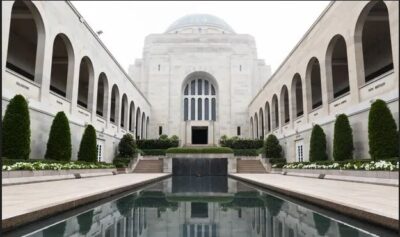
The Australian War Memorial is pursuing a new sponsorship deal from arms manufacturer Lockheed Martin despite being inundated with letters from veterans, historians and retired staff saying such arrangements are “degrading to the memory of our war dead”. The $500 million redevelopment of the Australian War Memorial
Lockheed Martin’s share price had increased during the recent Russian invasion of Ukraine, and the Afghanistan war was also highly lucrative for the company, which manufactured the Black Hawk helicopters used extensively during the conflict.
The AWM has also accepted funding from other arms manufacturers, including Boeing, Thales and BAE.
The approach has been criticised by former leaders of the memorial, including the former director Brendon Kelson, who died last month, and long-serving principal historian Prof Peter Stanley.
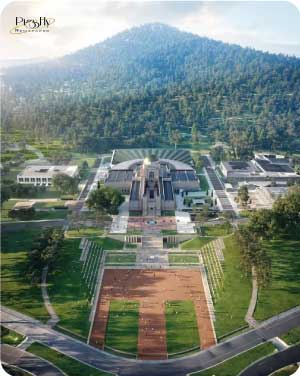
A multimillion-dollar plan to upgrade Australia’s national war memorial in Canberra is pushing ahead, despite critics’ claims that the project is more focused on exhibiting military hardware than preserving the site as a place for solemn commemoration.
The controversy comes as Australia grapples with the chaotic end to its 20-year military involvement in Afghanistan, and as polling suggests a public preference for the funds behind the memorial’s expansion to be spent on health or other services as the country tries to counter the COVID-19 pandemic.
Opened in 1941, the Australian War Memorial combines a museum, a memorial and an archive, and its self-described purpose is to lead remembrance and understanding of the country’s wartime experiences. Recognized for its heritage value and architectural significance, everything about the memorial is carefully planned, from the symmetry of its inner courtyard — flanked by bronze panels inscribed with the names of Australians who have died in conflict — to its location in a direct line of sight from the federal parliament.
Any major overhaul, therefore, was always likely to attract debate. Announced in November 2018, the 498 million Australian dollar ($370 million) redevelopment plan will double the size of the memorial’s exhibition space, add a research center and improve visitor access.
Perhaps most controversially, the project includes the demolition of Anzac Hall, an award-winning building opened in 2001 which was named for the Australian and New Zealand Army Corps, a military formation that fought in World War I. Today ANZAC is heavy with symbolism in both countries, summoning ideas of service and sacrifice.
FUA