

History does not need to repeat itself exactly to warn us what institutional demolition looks like.
Pigsfly warned about Russell Vought and Project 2025 in 2025. The question now is not what the blueprint said, but how much of it has moved into government.
America Is Not 1933 Germany. That’s Exactly Why We Should Read the Footnotes
Timothy Ryback’s 53 Days isn’t a prophecy. It is something potentially more useful: an instruction manual for recognizing institutional demolition while everyone is still arguing about terminology.
One of the strangest demands made whenever history becomes politically inconvenient is that an analogy must be perfect before we’re permitted to learn anything from it.
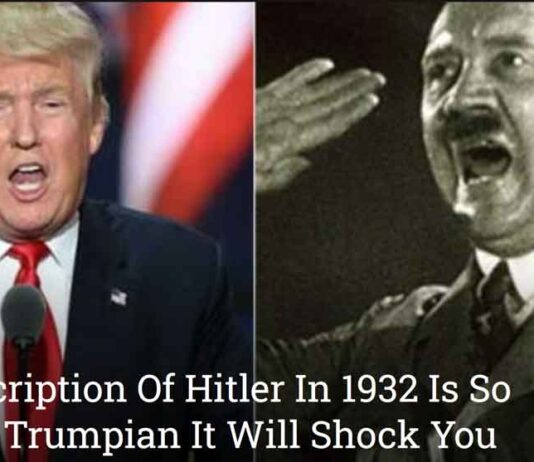
Is Donald Trump’s America literally Nazi Germany?
No.
Good. Meeting adjourned.
Apparently history may now return to its glass display case where it can remain safely incapable of teaching us anything.
Timothy W. Ryback has complicated that comfortable arrangement.
His new book, 53 Days: How Hitler Dismantled a Democracy, chronicles the astonishingly short interval between Adolf Hitler becoming German chancellor on January 30, 1933, and the Reichstag passing the Enabling Act on March 23.
Fifty-three days.
Not decades.
Not years.
Fifty-three days between taking office and obtaining the legal authority that effectively destroyed Germany’s constitutional democracy.
And one of the most disturbing aspects of the story is how much of it initially looked administrative.
There was paperwork before there were history books
We tend to remember authoritarianism retrospectively.
Uniforms.
Flags.
War.
Camps.
Ruins.
We remember the completed structure and forget the scaffolding.
Ryback focuses instead on construction.
Press pressure.
Civil-service purges.
Attacks on regional autonomy.
Elimination of civil liberties.
Political intimidation.
Expanded executive authority.
Each move made the next one easier.
And that is where modern readers inevitably begin noticing uncomfortable echoes.
Not equivalences.
Echoes.
There is an important difference.
Hitler’s rise occurred in an environment saturated with organized political violence. Nazi paramilitary organizations terrorized opponents and helped consolidate control.
There is nothing genuinely comparable in today’s United States.
That distinction matters enormously.
But it doesn’t erase every other lesson from the period.
Particularly the lesson that democracy’s procedures can be turned against democracy’s substance.
The swamp, apparently, has a German translation
Ryback recounts Hitler campaigning against what he described as a parliamentary “swamp.”
He describes a political leader possessed of immense vanity and grievance.
A leader demanding retribution.
A movement presenting institutional restraints as illegitimate impediments to the people’s will.
A government purging elements of the civil service it regarded as politically unreliable.
You can see why contemporary readers occasionally raise an eyebrow.
Possibly both eyebrows.
But the most useful comparison isn’t psychological.
It is structural.
Because here in the United States we have spent several years discussing another document concerned with restructuring government from the inside.
Project 2025.
You remember Project 2025.
The Project 2025 that Donald Trump said he knew nothing about.
That Project 2025.
The Heritage Foundation-led governing blueprint developed with contributions from a large conservative network and designed to transform how the executive branch operates.
Pigsfly Newspaper began warning readers in February 2025 about Russell Vought’s role and the institutional philosophy underlying this project.
Since then, the increasingly interesting question has been how many of the people and governing ideas associated with that supposedly distant enterprise would find their way into the Trump administration.
Because apparently Washington has developed teleportation technology.
People just mysteriously materialize inside administrations whose agendas they previously helped design.
Could happen to anyone.
Project 2025 was never merely a list of policies
This distinction matters.
A normal policy platform might say:
Cut this tax.
Increase this tariff.
Change this environmental regulation.
Spend more here.
Spend less there.
Project 2025 concerned itself with something more foundational:
Who controls the machinery?
Its authors devoted enormous attention to executive authority, federal agencies, political appointments and the career civil service.
That is why the personnel question matters.
Governments aren’t abstract concepts.
They are human beings occupying offices with statutory authority.
If people who spent years developing a theory about expanding presidential control then receive powerful positions inside an administration interested in expanding presidential control, the relevant observation isn’t:
“Well, the president said he didn’t write the book.”
Neither did most presidents write their own tax codes.
They still implement them.
The great historical trap
Ryback’s account contains another warning particularly suited to this moment.
Hitler’s conservative allies believed they could use him.
General Kurt von Schleicher believed Hitler’s mass political movement could be manipulated.
Media magnate Alfred Hugenberg helped circulate Hitler’s propaganda and eventually entered his government.
These weren’t men who dreamed of surrendering their own influence.
They thought Hitler was the vehicle.
They would remain the drivers.
This turned out to be what historians technically classify as a catastrophic miscalculation.
And perhaps that is the historical analogy Americans should contemplate most carefully.
Not moustaches.
Not uniforms.
Not whether somebody used precisely the same adjective in a speech.
Ask instead what happens when political parties, wealthy interests, media institutions or ideological movements decide that violating democratic conventions is acceptable because doing so temporarily helps them achieve objectives they consider more important.
Everybody imagines the emergency powers will be used against somebody else.
Everybody imagines their faction will remain influential.
Everybody thinks they have a seat at the table.
Until the seating plan changes.
Democracy doesn’t vanish. It becomes conditional.
The deterioration of democratic government rarely begins with a politician announcing:
“I hereby abolish democracy.”
That would at least have the virtue of clarity.
Instead, democracy becomes conditional.
Freedom for legitimate people.
Law enforcement for illegitimate people.
Independent institutions when they produce agreeable results.
Corrupt institutions when they don’t.
Elections respected when won.
Suspect when lost.
Civil servants professional when obedient.
“Deep state” when resistant.
Judges constitutional when favorable.
Activists in robes when inconvenient.
A functioning democracy cannot survive indefinitely under that logic because democracy requires losing sometimes.
It requires powerful people accepting decisions they hate.
The restraint is the system.
No, history doesn’t repeat itself
Mark Twain probably never actually said that history doesn’t repeat itself but rhymes, which is fitting because history has apparently been misquoting itself too.
But the sentiment survives for good reason.
America is not replaying Germany in 1933.
There will be no scene-for-scene remake.
And anyone waiting for one may miss the point entirely.
The lesson of 53 Days is not that every democracy dies identically.
It is that democratic institutions can disappear with breathtaking speed once enough people decide those institutions are obstacles rather than safeguards.
Which returns us to Trump’s completely unrelated, absolutely separate, mysterious-stranger-on-a-bus Project 2025.
Perhaps the most useful thing journalists can do now is stop arguing about whether Trump personally loves the branding.
Follow the people.
Follow the appointments.
Follow the executive orders.
Follow the agency restructures.
Follow the claims of presidential authority.
Follow what happens to career officials who resist.
Follow what happens to independent institutions.
Then compare what occurs with what Project 2025 proposed.
No swastika hunting required.
No Hitler moustache Photoshopping necessary.
Just reporting.
Just documents.
Just personnel.
Just power.
Because democracies rarely collapse while everyone agrees that democracy is collapsing.
The agreement usually arrives later.
Historians call that hindsight.
Journalists have a less comfortable responsibility.
We’re supposed to notice things while they’re happening.