

Anthony Albanese’s ministry contains more surprises than expected following a factional kerfuffle
The prime minister has kept his praetorian guard in the central engine room of the government while there are 10 women in his 23-person cabinet
Katharine Murphy The Guardian’s Political editor writes
Labor has now secured 77 seats, which means Anthony Albanese will govern with a majority in the 47th parliament. The new prime minister advised his caucus colleagues on Tuesday not to waste a day of government and it’s fair to say the new Albanese administration is opening at a clip.
On Tuesday evening, Albanese appointed his first cabinet and outer ministry. Here are some things we learned.
Were there any surprises?
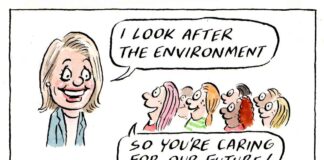
More than I thought there would be. It had been anticipated for some time that Labor’s deputy leader, Richard Marles, would take the defence portfolio in government, but less anticipated was Tanya Plibersek moving from education to environment, Clare O’Neil stepping into the home affairs portfolio and Tasmanian Julie Collins picking up housing and homelessness.
I would have expected Jason Clare, Labor’s campaign spokesperson, to implement the housing policy he worked up in opposition, but Clare ended up with education. I was aware Albanese wanted to promote the Queensland leftwing senator Murray Watt, but he’s vaulted straight into cabinet as agriculture minister.
It’s also a bit strange, in a machinery of government sense, that early childhood is now situated in the outer ministry, given cheaper childcare was so central to Labor’s campaign narrative. I’m surprised to see the Victorian rightwinger Tim Watts, who was formerly the shadow assistant minister for communications and cybersecurity, now in a foreign affairs role, given he has deep policy expertise in communications.

Who is in and who is out?
Three women have gone from the backbench to the new outer ministry: Anne Aly, a leftwinger from Western Australia, and two rightwingers – Anika Wells from Queensland and Kristy McBain from New South Wales.
There was a kerfuffle behind the scenes as the factions settled their nominations for cabinet and the ministry, because the right faction was in danger of not complying with Labor’s affirmative action rules.
To ensure the right faction remained affirmative action-compliant, Wells replaced the Queensland rightwinger Shayne Neumann (who had responsibility for veterans’ affairs) on the new frontbench. Aly has been given early childhood education, Wells aged care and sport, and McBain regional development. Persisting with women, there are now 10 in a 23-person cabinet, which is a record.
What does the ministry tell us about the power dynamics of the new government?
Albanese has kept his praetorian guard in the central engine room of the government – Marles in defence, Penny Wong in foreign affairs, Katy Gallagher in finance, Jim Chalmers in Treasury, Mark Butler in health and Tony Burke as leader of the lower house and in the workplace relations portfolio (where Albanese wants to try to establish some Accord-style consensus between unions and employers). Longtime friend and factional ally Linda Burney will spearhead the constitutionally enshrined voice to parliament in Indigenous affairs.
Having developed the climate policy that helped neutralise what had been a politically toxic issue for Labor in the 2022 campaign, the NSW rightwinger Chris Bowen will implement the agenda he worked up in opposition in the climate and energy portfolio. The new prime minister preserved former Labor leader Bill Shorten in the portfolio he wanted, disability, even though the two men are not close.
Albanese has two loyal lieutenants in the outer ministry – leftwingers Pat Conroy (working with Wong on the Pacific) and Andrew Giles managing immigration (with fellow Victorian Clare O’Neil in home affairs), and the leftwing senator Tim Ayers as assistant minister for trade and manufacturing.
A few points of interest
Ahead of Tuesday’s ministerial appointments, there had been a push from Western Australians for greater frontbench representation, given the west delivered four lower house seats to Labor’s column in 2022. The west appears well represented in this ministerial line up, including the appointment of Patrick Gorman as the assistant minister to the prime minister.
Andrew Leigh, an economics professor, is always at risk of dropping off the frontbench because he is not a member of a faction. But Albanese has kept him as an assistant treasury minister with responsibilities for competition policy and for charities in recognition of his considerable expertise.
The South Australian rightwing veteran Don Farrell has also climbed up the ministerial batting order; now he’s Labor’s deputy Senate leader. Kristina Keneally served in that role before her ill-fated move to the lower house. Farrell keeps the portfolio of special minister of state, which he held in opposition, and adds trade and tourism to the mix.
What now?
The first Albanese cabinet and ministry will be sworn in at government house on Wednesday morning and the subcommittees of the new cabinet will meet for the first time on Thursday.
Albanese has already completed his first overseas trip, to Tokyo, last week and he will depart Australia again at the weekend for a visit to Indonesia.
Albanese will nominate Sue Lines, a Western Australian senator, as the new Senate president when the 47th parliament meets for the first time in the last week of July. It’s not yet clear whether he will draw the new speaker of the House of Representatives from within Labor’s ranks (Queenslander Milton Dick and Victorian Rob Mitchell are said to be interested in the role) or from the crossbench. The Tasmanian veteran independent Andrew Wilkie has expressed interest in taking the Speaker’s chair.
This article was first published in The Guardian
Linda Burney tells Peter Dutton to be ‘on the right side of history’ regarding voice to parliament
New minister for Indigenous Australians says after a decade of divisive political discourse ‘this is an opportunity for unity and for leadership’
The incoming minister for Indigenous Australians, Linda Burney, has urged the new opposition leader to return to “the right side of history” by offering bipartisan support for enshrining an Indigenous voice to parliament in the constitution.
Burney said on Tuesday there was “no shame” in learning from history and the forthcoming proposal was an “opportunity for Peter Dutton to show his much-talked-about different side”.
Following his election as Liberal leader on Monday, Dutton conceded he had “made a mistake” by boycotting the 2008 apology to the Stolen Generations, but said he would “wait for the detail” on a proposal for a referendum to change the constitution.
The prime minister, Anthony Albanese, reaffirmed in his first post-election caucus meeting on Tuesday a commitment “on behalf of my government to the implementation of the Uluru Statement from the Heart” – beginning with a voice to parliament.
Delivering the annual Lowitja O’Donoghue Oration on Tuesday evening, Burney said there was “no one for whom supporting a referendum for a voice to parliament represents a bigger political opportunity than for Peter Dutton”.
“After a decade of divisive political discourse, of lifters and leaners, of those who have a go – and by inference, those who don’t – this is an opportunity for unity and for leadership,” Burney told the Don Dunstan Foundation.
“It’s also about being on the right side of history. And Peter Dutton has in recent days reflected on what it is like to be on the wrong side of history, after walking out on the apology to the Stolen Generations.” ⇒
From SpaceX to the First Fleet: Sussan Ley’s Australia Day History...


Burney said: “We all grow and we all change and there is no shame in that at all.
“In fact, that is what the journey of reconciliation is all about, and it is a path I would be very pleased to walk with Peter Dutton and the Liberal party,” she said.
Burney said the Nationals and the Greens also had important decisions to make “about putting the national interest ahead of narrow political ambition”.
“I know Australia is ready for this,” she said. “And if we are all flexible, and we all accept some level of compromise, together, this parliament could unite to inspire our country to something really great.”
Burney acknowledged her predecessor as minister for Indigenous Australians, Ken Wyatt, saying she was “very pleased to be continuing where Ken left off”. She noted the co-design process instituted by the former Coalition government “was prevented from considering constitutional change”.
“I say to Ken: I need your support, brother,” she said.
Burney acknowledged a referendum was “a very high bar in Australia” given that it would have to be supported by a majority of people and a majority of states in order to pass.
She said she remembered the former prime minister Malcolm Turnbull dismissing the notion of a referendum on a voice out of hand, which she believed was “heavily influenced by his experience with the 1999 referendum on a republic”.
“While profoundly disappointing that the prime minister of the day did not have confidence in the Australian people, it was at least a better reason than Scott Morrison’s retort during the recent campaign – ‘why would I?’”
Burney said a referendum was needed because “the existence of a First Nations voice to parliament should not be subject to the whims of the government of the day”.
She said Labor’s agenda was broader than implementing the Uluru statement and involved “turning the tide on incarceration through justice reinvestment” and “reinvesting in housing and services in the Northern Territory homelands”.

Burney said she would work ambitiously with business, and in the public sector, to lift First Nations employment, and continue to work with the Coalition of the Peaks on Closing the Gap “and lifting the ambitions for our people”.
Dutton said on Monday he now understood “the symbolism” associated with Kevin Rudd’s apology to the Stolen Generations and he had made a mistake by not attending.
“For me, at the time, I believed that the apology should be given when the problems were resolved and the problems are not resolved,” Dutton said this week.
Albanese on Tuesday night said he was appointing the Labor senator Pat Dodson to be special envoy for reconciliation and implementation of the Uluru Statement from the Heart.
Labor senator Malarndirri McCarthy was appointed assistant minister for Indigenous Australians and for Indigenous health.
The prime minister said he wanted to introduce structures to allow people across the parliament, and society more generally, to participate in the process of constitutional reform. “This is a priority for the government,” Albanese said.
David Littleproud, who defeated Barnaby Joyce to take over as leader of the Nationals on Monday, told reporters he would seek “guidance and clarity” from the new Country Liberal party senator for the Northern Territory, Jacinta Price, regarding the voice to parliament. Price has previously expressed scepticism about the proposal, questioning whether it would lead to any practical action and suggesting it would be divisive.
The Greens have said they support the Uluru Statement from the Heart, but have a different stance on the sequencing of actions, arguing that a “treaty-first approach is essential to ensure that sovereignty is recognised”.