

The Liberals demand to know who the independents would support, but refuse to explain what deals they have with Clive Palmer
Rachel Withers writes in The Monthly
For weeks now, the increasingly shrill “moderate” Liberals have been demanding to know who the teal independents would support in the event of a hung parliament. The demand is obviously ridiculous – declaring now who they would support would mean that they could no longer be considered independent, and would undercut their potential bargaining power before hung-parliament negotiations have even begun. (Although this, no doubt, is the Liberals’ goal.)
The teal independents have in fact made it quite clear what they will be seeking in exchange for their support, saying that they will side with whoever will better meet their priorities on climate and integrity, including the Coalition if it is willing to come to the table.
This hasn’t stopped figures such as Wentworth MP Dave Sharma insisting that his opponent, Allegra Spender, would support Labor no matter what, even going so far as to call her a liar on Sunday after she told Insiders that she would be willing to back Scott Morrison. “Each Teal candidate should state honestly and transparently who they will vote for now, not in three weeks’ time,” he tweeted the other day, quoting The Australian. “Their voters deserve nothing less.” But if these voters deserve to know who the independents might deal with, don’t they deserve to know what deals his party has already done with Clive Palmer? Or with the Nationals? Or between the Nationals and One Nation?
Yes, the preference deals – one of the stupider elements of Australian elections – are flying thick and fast. It’s obvious that the Liberals have made some sort of arrangement with the United Australia Party, which until recently swore it would put the major parties last on its how-to-vote cards, but is now telling its voters to support the Liberals in key seats. (As Crikey notes, Palmer’s anti-establishment followers may not be happy with this backflip.)
Both parties insist that “no discussion” has taken place. But it’s hard to swallow the idea that this unlikely mutual-preferencing in Wentworth and Mackellar is merely a coincidence. Of course, Palmer is likely no fan of the climate-focused teals either. And it’s not unlike him to turn around and back the Libs despite everything he’s said, which he did last election, later claiming Bill Shorten’s loss as his own victory. (Speaking to RN Breakfast this morning, Labor leader Anthony Albanese said he wasn’t surprised by these preferences.) But why, if there was no deal, would the moderate Libs be preferencing the UAP in return in their inner-city seats? Why preference Palmer’s party above centrist opponents who share their supposedly socially progressive views on climate and gender?
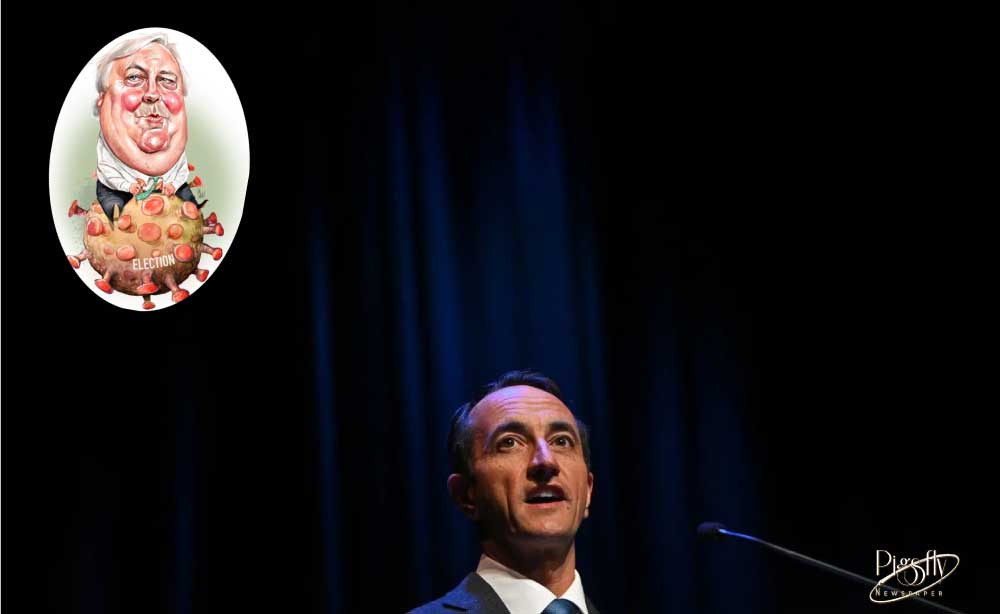
Liberals such as Josh Frydenberg keep arguing, in an attempt to defend their questionable how-to-vote choices, that their own preferences are all but useless here, which is true. So what else did Palmer – who would have been unlikely to trade his powerful preferences for nothing – secure in this arrangement, formal or otherwise? That is the question on many people’s lips, with Mackellar independent Sophie Scamps wondering whether it might have anything to do with the new coalmine Palmer is hoping to have approved in Queensland. As Warringah MP Zali Steggall noted, it’s curious that the Morrison government wasn’t really interested in the truth in political advertising or political spam text-messages laws, which would have upset the UAP, adding (in a riff on Sharma’s tweet) that the Liberals should “honestly and transparently” tell voters what was going on.
Moving beyond the “serious questions” this raises about what may have already been traded away by the Liberal Party, are these so-called moderates not embarrassed to be receiving preferences from the far-right, and to be listing an anti-vax group above their centrist opponents? (It’s worth noting that North Sydney MP Trent Zimmerman appears to have refused to be part of this arrangement, putting him once again head and shoulders above his fellow “moderates” when it comes to integrity.)
Frydenberg’s recent argument, that the symbolism doesn’t matter, is simply bullshit. Inner-city Liberals have been doing everything they can to burnish their moderate credentials lately, whether on climate or religious discrimination, with some belatedly crossing the floor in the final weeks of parliament. But the fact that they are willing to give and take such preferences speaks to the whole issue with these MPs: at the end of the day, winning comes first, and party always comes before principle.
It’s unclear how much difference how-to-vote directives really make, given that voters are still able to make up their own minds on preferences. It’s especially unclear with Palmer’s supporters, who don’t seem particularly likely to take directions.
But it will be curious to see how this goes down with those progressive but wealthy voters, in electorates where the incumbents are under threat specifically because they haven’t been properly representing their constituents’ social values.
Much has been made of the betrayal this deal may represent to UAP voters, but it will likely also be seen as a betrayal by those teetering on the fence in Wentworth and Mackellar. Much like the prime minister, Sharma has decided that the extra votes he may pick up from the far-right are worth the risk of losing a few moderate ones along the way. After all, he and Morrison have more in common than Sharma would have his voters believe.