

Monday, April 20, 2026
HomePOLITICSSuperannuation for houses is a bad policy

Superannuation for houses is a bad policy

Distraction, division, bad policy,

writes in The Guardian

If the 2022 contest is between a bulldozer and a builder, it makes sense that the final act of the election be staged on a residential housing construction site.

Back when Scott Morrison was being written off erroneously as a dead prime minister walking at the same point of the campaign in 2019, he used the official launch to unveil a new homeowner deposit scheme to help first-home buying couples get “their first leg on the first rung of the ladder”.

Learning from that, Anthony Albanese focused on housing this time, using his campaign launch a couple of weeks ago to unveil a shared equity scheme for homeownership modelled on initiatives in some states. The new Labor scheme would build on Morrison’s scheme from 2019.

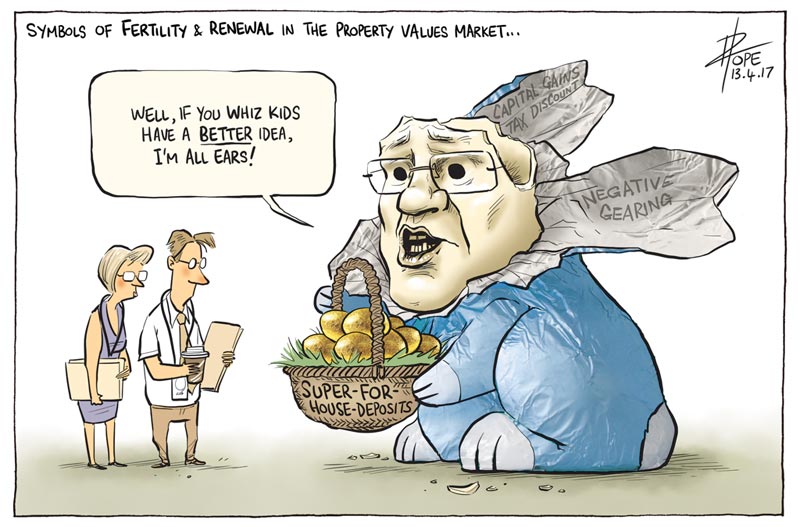
As his final throw of the dice in this election, Morrison tracked back to homeownership, dusting off a well-ventilated but previously perpetually stalled proposal for people to use their superannuation to help with the purchase of their first home.

Just for the record, Malcolm Turnbull once blasted this concept as “thoroughly bad” and “the craziest idea I’ve heard” and no less an eminence than Mathias Cormann noted several years ago this would “increase demand for housing and … would actually drive up house prices by more”.

But here we are.

Morrison has whipped this out, not because it is good policy (although I suspect the “it’s your money” marketing pitch is simple enough to resonate with Australians who are only half listening) – but because he wants a fight, a politically productive one that might move soft votes into the Liberal column at the decisive point.

Morrison lost the key definitional fight of last week – the one about wages. Advocating a real wage cut for Australia’s lowest paid workers wasn’t exactly an election-winning line. So as the prelude to Sunday’s super shazam, Morrison moved to change the conversation.

On Friday, the devil you know casually rebranded himself Morrison 2.0. The prime minister told voters I know a good number of you dislike me, but the pandemic made me look stubborn and impatient when I’m actually cuddly and task oriented, and if you give me another three years I promise I’ll infuriate you less.

While Morrison set about proving once again he is prepared to do whatever it takes to win, Peter Dutton suddenly disclosed the presence of a Chinese surveillance ship off the coastline just in case anyone planning to vote over the next few days was interested in that information.

Sunday was the next instalment of the Coalition’s soft vote courtship. The Liberals certainly know how to craft cut-through messages and they run a formidable campaign machine, so the atmospherics of Sunday were as slick as you might expect.

Incumbency is the structural advantage Morrison possesses and he used it. In terms of narrative, Morrison used his official campaign launch to remind Australians they liked him once – back during the opening 12 months of the pandemic, when the official objective was building the “bridge” to the other side of the crisis. The bridge was back in force on Sunday; a totem of beneficent incumbency.

Then Morrison moved to pick his fight with Labor about people using their superannuation savings to help fund a first home, while also widening access to super tax concessions for any asset rich older Australians currently contemplating downsizing.

Labor, trying to remain aerodynamic seven days from polling day, could cop the second of these ideas, but not the first. Paul Keating was out of the blocks within the hour, monstering Morrison’s plan

The shadow housing minister, Jason Clare, said using super savings for home purchasing would be yet another demand-side stimulus when the main problem fuelling the lack of affordability was a lack of housing supply. He noted stimulating demand further would only accelerate house price inflation. Clare also pointed out that the cohort of Australians currently priced out of the housing market didn’t have super balances substantial enough to put together a deposit.

Now the truth is neither side of politics is proffering a serious solution to Australia’s housing affordability problem at this election. A serious solution would involve two things – a substantial supply side intervention, and adjusting the tax concessions that benefit investors and allow them to outbid would-be owner-occupiers.

Labor tried on the tax concessions back in 2019, and voters thumped them. Notwithstanding the problem that voters resoundingly rejected at the last election one of the solutions that might actually make a substantive difference, substantive solutions to this problem are what Australians actually need.

Rather than endlessly supercharging demand while nibbling delicately at supply, voters need Australia’s political class to engage in serious policy thought about how to balance the interests of the current rights holders, Australia’s property owners, with the rights of others to afford the security and dignity of a roof over their heads.

Last week I listened to a story on the ABC’s AM program about families in Bundaberg – families with decent jobs – having to live in tents and cars because there’s no affordable housing stock available to them.

This doesn’t really sound like an Australia I want to live in, an Australia where I have a roof over my head for no reason other than I was able to buy my first home in the mid-1990s. I have a safe place to live that I can call my own, but a lot of other people who work hard and have kids to feed and educate and keep safe are contemplating pitching a tent for shelter.

But, hey guys, Morrison has his election fight.

Aren’t we all lucky? Aren’t we lucky that’s the priority: what’s needed to get the Coalition campaign closer to victory over this coming week.

Morrison told voters on Sunday he was seeking a second term because he was “just warming up”.

Actually, if Morrison wins this coming Saturday (and it’s entirely possible he will) it will be the Coalition’s fourth term, not its second – and after three terms in office, the country is standing still on most of the problems that Australia faced back at the time Tony Abbott took office.

There’s a reason why that’s happened. The reason is political product differentiation too often becomes the priority rather than the pursuit of policy substance in the national interest.

Paul Keating attacks Coalition’s super for housing policy as economists warn of soaring prices
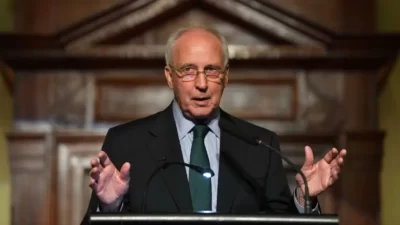
A Coalition plan to allow first-home buyers to use their superannuation to buy property has been slammed as a “frontal assault” on super that would light a fire under house prices.

Announced at the party’s campaign launch in Brisbane on Sunday, the policy would allow first-home buyers to use up to 40 per cent of their superannuation savings, up to a maximum value of $50,000, to help buy a home.

The uncapped ‘Super Home Buyer Scheme‘ would apply to new and existing homes, with the invested amount and a share of any capital gain to be returned to home buyers’ superannuation funds once they sell their property.

Prime Minister Scott Morrison told the campaign launch that helping young voters buy their own homes was the best way to help them achieve financial security in their retirement.

But economists said the policy would drive up house prices while former Labor leader Paul Keating, the architect of the compulsory super system, said it amounted to “no more than another frontal assault by the Liberal Party on the superannuation system”.

“The Liberals hate the superannuation system – they object to working Australians having wealth in retirement independent of the government,” Mr Keating said in a statement.

“The Libs believe ordinary bods should be happy with the age pension. Let them know their place.

“If the public needs yet another idea to put this intellectually corrupt government to death, this is an important offence – and with the government, its unprincipled Prime Minister.”

Economists warn of short-term price shock

The policy idea was previously spruiked by Liberal MPs including Tim Wilson, who is at risk of defeat in the Victorian seat of Goldstein, but it failed to get up under former prime minister Malcolm Turnbull.

The Coalition says the plan would make it easier for Australians to buy a home by reducing the time it takes to save for a deposit by an average of three years.

But economists argue the policy would simply push up house prices, at least in the short term.

Grattan Institute economic policy program director Brendan Coates told The New Daily the plan would increase prices by boosting demand. But he added that prices should stabilise down the track.

Mr Coates said he was unable to estimate how much house prices would go up in the immediate future if the policy was implemented.

“Once you deal with that bring forward with demand, as people saving for a deposit use the scheme to get themselves over the line, the impact of housing prices over the long term will be relatively modest,” he said.

Over the long term, accessing up to 40 per cent of super will just become “an established part of how a lot of people think about getting into the housing market”.

Mr Coates said the policy should not affect people’s ability to save enough money for retirement, as under the superannuation guarantee “people save too much anyway”.

The current rate of employer-mandated contributions is 10 per cent of a person’s salary, but this is legislated to rise to 12 per cent by July 2025.

“The rate of compulsory super is already too high and so from that sense I don’t think this is going to condemn anyone to a life of poverty in retirement if they use this to buy their own home,” he said.

“It provides more support to people that already have more because they’re using their own super to get into the market.”
‘Reckless inflation’

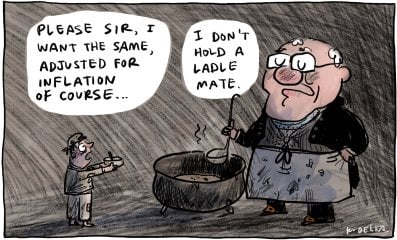
Independent economist Saul Eslake was more scathing of the plan, telling The New Daily that “this reckless inflation of house prices must stop … and this is what this scheme will not do”.

He said if the maximum amount is withdrawn, the policy would allow single households to pay $250,000 and couples $600,000 more than what they otherwise would on a new house.

“We have now almost 60 years of evidence going back to the first-home owners grant scheme that the Menzies government introduced in 1964 … that schemes which allow Australians to pay more for housing than they otherwise would result in more expensive housing, not in higher home ownership rates,” he said.

“You have to ask yourself: Why do politicians keep doing things in the face of such overwhelming evidence that they don’t work?

“The only answer that I can give is, for all the crocodile tears they shed about the difficulties faced by would-be young first-home buyers, they know that in a typical year there are only 100,000 of them who succeed.

“What they also know is there are 11 million people who own at least one home, within that there are two million people who own two or more homes, and the last thing they want is any government to do anything that restrains the rate at which house prices go up.”

Mr Eslake conceded that the house price increase would “have a one-time impact” and the rate of house price inflation would not go up permanently.

“But, the house prices will be higher than they otherwise would have been,” he said.

Both Mr Eslake and Mr Coates agreed that capping the policy would have gone some way towards limiting a potential house price hike.

Declining affordability

Data released earlier this month by CoreLogic and ANZ Bank revealed that many households have gone backwards in their efforts to overcome the property deposit hurdle in the two years to March, with soaring house prices far outpacing income growth.

Modelling released five months ago by the McKell Institute found that allowing prospective buyers to access $40,000 of their superannuation would push up house prices in Sydney by more than $40,000 and in Brisbane by almost $100,000.

It found an additional $25 billion of debt would be incurred by Melbourne households while debt in Sydney would increase by $23 billion.

Labor’s housing spokesperson Jason Clare described the Coalition’s policy as “the last desperate act of a dying government”.

“Every heavy hitter in the Liberal Party of the last generation that have looked at this issue have knocked it on the head – whether it is John Howard, Peter Costello, Malcolm Turnbull or Mathias Cormann,” he said.

It comes after a parliamentary committee chaired by Liberal MP Jason Falinski recommended in March that the government allow buyers to use their superannuation as security for a home loan but not as a deposit.

In its final report released on March 18, the committee noted that “allowing first-home buyers to access or borrow against part of their super to purchase a home would, in the absence of increased housing supply, likely increase demand and lead to higher property prices”.

Labor’s housing affordability policy is based on the government taking on up to 40 per cent of the cost and equity in a new home up to a value of $380,000.

Under the ‘Help to Buy’ plan, home buyers would avoid paying lenders mortgage insurance and would take on far less debt. They could then buy back the government’s stake in stages, or pay it back after the eventual sale of their homes.

Mr Eslake said that Labor’s policy would also put upwards pressure on house prices, but to a lesser degree than the Coalition’s plan due to stricter eligibility requirements.


- Advertisement -Newspaper WordPress Theme

Latest news

“We don’t have a shortage of supply; we have a glut of greed.”

While you’re sweating at the bowser and choosing between a heater or a steak, the suits in Canberra are busy polishing the shoes of...

Tech for Humans

You Aren't "Bad with Tech." The modern computer was designed to serve the company that built it, not the person using it. We're changing that. GeniusDesk...

GeniusDesk OS Foundation Cohorts

GENIUSDESK OS Sovereign Vault | Founding Node Founder #1 Dr. Abby "The promise kept." You are the first of the 88. Your journey of sovereignty parallels my own. Welcome...

FROM SHOP