

Morrison government failed to show cashless debit card scheme works, auditor general says
Scathing report finds Department of Social Services has not demonstrated the program is meeting objectives
Luke Henriques-Gomes The Guardian’s Social affairs and inequality editor reports
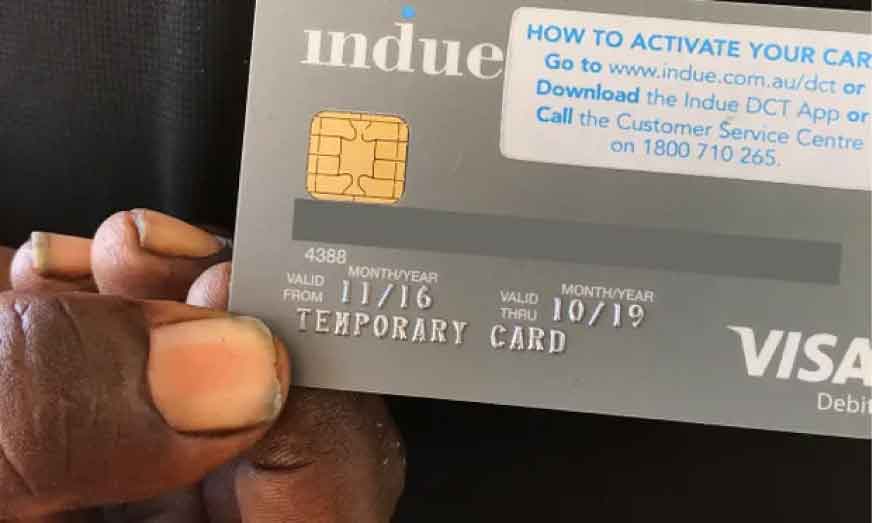
The auditor general has been highly critical of the former government’s handling of the cashless debit card, finding the Morrison government had not demonstrated whether the scheme was working despite operating trials across the country for more than five years.
A scathing Australian National Audit Office (ANAO) report, tabled in parliament on Thursday, said the Department of Social Services, which ran the program, had “not demonstrated that the CDC program is meeting its intended objectives”.
The finding follows two independent evaluations of the card and with the former government having spent more than $80m on its operation, expanded the program into new regions and even tried to make it permanent.
The new Labor government has pledged to scrap the cashless debit card and all forms of income management as compulsory schemes, but flagged it would first consult with affected communities.
The ANAO’s most recent audit was established after it had been highly critical of the department’s handling of the scheme in a report handed down in 2018.
The card, established in 2016 under the former Coalition government, quarantines 80% of a person’s welfare payments on to a debit card that cannot be used to withdraw cash or buy alcohol or gambling products.
The card was pitched as a solution to social problems in particular communities and supporters claim there is anecdotal evidence it is working.
But the ANAO report finds that, despite two independent evaluations, the government is yet to demonstrate the card is meeting these objectives.
It was particularly critical of a $2m independent evaluation conducted by the University of Adelaide, which was established after the ANAO found the first evaluation’s flaws meant it was “difficult to conclude whether there had been a reduction in social harm”.
In the case of the second evaluation, it had “similar methodological limitations to the first impact evaluation”, the ANAO said, a fact admitted by the government when it was finally released in February 2021. This essentially meant it was still difficult to determine whether any outcomes could be attributed to the card.
However, before then, the government had sought to legislate to make the scheme permanent across sites in Western Australia, South Australia and Queensland, and expand it to the Northern Territory.
It had refused to release the report while parliament considered the bill, though Guardian Australia reported on leaked sections which cast doubt on the card’s effectiveness.
In the end, the government won enough support for the trials to continue, but the Senate opposed making the trials permanent.
“The CDC program extension and expansion was not informed by an effective second impact evaluation, cost-benefit analysis or post-implementation review,” the ANAO report said.
The ANAO also revealed the government had commissioned a cost-benefit analysis, but again found its content was of limited use.
The card began in Ceduna, South Australia and East Kimberley and the Goldfields in Western Australia, but was then expanded to Bundaberg and Hervey Bay in Queensland. It was more recently introduced into the Northern Territory and Cape York, which were already using forms of “income management”.
Critics have long argued the card was ineffective at reducing social harm, stigmatised people on welfare, caused practical difficulties including locking low-income people out of the cash economy, and that the millions spent on the scheme would be better spent on other social programs. Other independent reports have also questioned its effectiveness.
In response to the ANAO, the Department of Social Services noted the audit did find the “department’s administrative oversight of the program is largely effective”.
“We acknowledge the rationale and supporting evidence that the second impact evaluation and the cost-benefit analysis were constrained by limitations to available data,” it said.
It rejected a recommendation for an independent review of the second evaluation, saying it would not be value for money given the department had already accepted its limitations.
It accepted the ANAO’s recommendation that the department develop “internal performance measures and targets to better monitor CDC program implementation and impact”.
This article was first published in The Guardian
If there is largesse to be found and delivered from the government to the private sector, just like National MP Barnaby Joyce, Larry Anthony is never too far away.
Anthony was the deputy chairman of Indue up until 2013 but his trust company, Illalangi, still owns substantial shares in Indue
Public money transferred to private hands
During the welfare card trials, Indue has received between $4,000 to $10,000 for each participant in the trial, even though the Newstart allowance is less than $14,000 per year. Certainly, there are start-up costs involved in servicing this type of program, but up to $10,000 for a private company to manage an account only worth up to $14,000 annually raises questions of whether the Indue company is the most cost-effective option for this scheme. It also raises the question of why Indue was chosen in the first instance, especially when the expertise and experience provided by the National Australia Bank, Commonwealth Bank, Westpac or ANZ would have been far superior.
Up to June 2018, the amount received by Indue was at least $8.8 million and, reportedly, up to $21.9 million as at August 2019. If the roll-out of the cashless welfare card is extended on a widespread basis – as many Liberal and National MPs are now calling for – the value of the Indue company, and the shares held by Anthony and other Liberal and National party operatives will increase exponentially.
Who else will benefit from the expansion of Indue? Just like the expansion of ABC Learning in the early 2000s, Indue has become a magnet for insiders wanting to cash in on government largesse.
A little potted history
In 2013, Andrew Forrest was chosen by Tony Abbott LNP, to lead a review into Indigenous employment and training programs, which was to report to the Australian government.[9] Alan Tudge was to work with Forrest on the review,[10] and Marcia Langton was also on the review committee.[11] The review was delivered on 1 August 2014, with 27 recommendations.[12]
Forrest recommended that the Healthy Welfare Card be mandatory for unemployed people, carers, people with disabilities and single parents.[13] According to Langton, the review recommended that the card only be used in areas where most households were receiving welfare, with the goal of ending intergenerational poverty.[14] The Forrest Review did not review the impact of the BasicsCard or other income management schemes when recommending the Healthy Welfare Card.[15] While Forrest initially envisaged a fully cashless card, Tudge altered it to be mostly cashless.[16] Marcia Langton has since withdrawn her support for the scheme citing it as “brutal” and abuse of the poor.[17]
The many problems of the Indue card
There are many problems with the cashless welfare card. Senate inquiries from 2015, 2017 and 2018, have all shown that in the trial regions, there has been no change in crime rates (in some areas such as Kununnura and Wyndham, there was actually an increase in crime statistics, as well as an increase in self-harm and suicide).
The Minister for Social Services at the time, Dan Tehan, claimed the “cashless debit card is making a real difference in the communities where it operates”, even through the Australian National Audit Office found the trials and outcomes were not adequately monitored and, because of this, ANAO could not evaluate whether the trials were either effective in their desired social outcomes, or whether the relationship with Indue provided the taxpayer with value for money.
Despite this lack of effective data, and lack of transparency in the relationships between Indue and the Liberal and National parties, the cashless welfare card trials have been extended until the end of June 2020.
There are many fundamental flaws with the cashless welfare card trials, as recent Senate inquiries have shown. And the people promoting the trials – such as Andrew Forrest – should be nowhere the decision-making processes for how governments should spend and manage welfare monies.
Australia has instigated a wholesale transfer of its welfare system towards a private company that has no interest in the wellbeing of welfare recipients, and sets up a wide range of opportunities for corruption and a very thin line between government, private corporations and political parties.
And, just like the experience of ABC Learning just over a decade ago, it’s another social and political disaster in the making which the public will be forced to bail out.
We are all sick to death of politicians and political machines
This sicking tale highlights just how self-serving they ALL are
Revenge served cold for Liberal factional kingpin blamed for election wipeout

Alex Hawke made a career out of exploiting divisions in the Liberal Party and has been at the centre of some of the most infamous political manoeuvring in its history.
Now the shoe appears to be on the other foot.
The Liberal numbers man has been named as masterminding a plot to have the party’s New South Wales branch dissolved so candidates in a dozen seats could be installed without a vote of grassroots members.
Calls for Mr Hawke’s resignation have been made, but Liberal sources say there are growing calls for the party to go even further.
“What’s the difference between losing 16 and losing 17 seats?” one Liberal said when asked the impact on the party room. “A silver lining.”
When Tony Abbott this week said that “heads have got to roll” in the NSW Liberals for “those who’d played the factional game”, there was no doubting who he meant.
Leaders in an otherwise divided party back a plan by Senator Andrew Bragg to cut operators like Mr Hawke out of preselections by making it harder for member ballots to be cancelled .
Open preselections are already official Liberal policy after party members voted overwhelmingly for reform five years ago, only to ignore it this year.
Political enemies
Mr Hawke has succeeded despite his many enemies and condemnation from the likes of commentators Alan Jones, Miranda Devine and Peta Credlin.
Prime Minister Anthony Albanese, in a 2006 media release, said Mr Hawke was “well known for his extremist views and tactics within the Liberal Party”.
This reputation was cemented by what critics allege was Mr Hawke’s first documented disloyalty, a story that has become Liberal legend.
Mr Hawke was a long-time ally and staffer for David Clarke, leader of the dominant faction in NSW called “the Taliban” for its members’ uncompromising views.
But after Mr Clarke supported his protege’s preselection for the seat of Mitchell, Mr Hawke battled him for control of political territory, which he won.
Mr Hawke spun off his own political faction, the centre-right, known to detractors as the “ambition faction” for bringing all of the tactics employed by moderates and conservatives without the burden of their convictions.
One of the first to sign up was Scott Morrison.
Mr Hawke was named as a leader of a plot to vote for Peter Dutton in a leadership spill to make him overconfident and PM Malcolm Turnbull wounded all to help undeclared candidate Scott Morrison.
“There’s a lot of cleaning up to do in the NSW division of the Liberal Party,” Mr Dutton said this week.
“There was an unacceptable arrangement in relation to preselections at the last election.”
Mr Dutton’s deputy, Sussan Ley, has denied involvement in Liberal factions, but party sources have long said she aligns with the centre-right.
False dilemma
Slippery slope
No deal
Leading up to the election, Mr Hawke did not show up to 10 months’ worth of meetings on a Liberal panel reviewing preselections, on which he represented Mr Morrison.
So nominations stalled; the factions tried to broker a deal in secret.
Seats at stake included Mr Hawke’s seat of Mitchell, under threat from a long list of aggrieved parties, Ms Ley’s seat and also Trent Zimmerman’s former seat of North Sydney and nine “winnable” contests.

Mr Hawke declined to comment in response to a text message from The New Daily but has said he was motivated by a desire to protect women candidates for Parliament and that Mr Morrison always protected the party.
But one Liberal MP says views in the Canberra party room are changing: ‘‘Everyone … is starting to twig that Hawke led and Morrison followed him on this.’’
A factional peace plan pitched by Mr Hawke failed and the federal Liberal Party had little choice but to back Mr Morrison’s proposal to take over.
Federal Liberal vice president Nick Minchin told The New Daily the candidates were endorsed one year too late.
“The state and federal party must not allow such manipulation of the constitution to ever happen again,” he said.
Mr Hawke and Ms Ley kept their seats, as did Jenny Ware in Hughes, held by Craig Kelly, who quit the party in the last parliament, but otherwise all other hand-picked candidates lost.
Critics say Mr Hawke is irredeemable and point to an article by Paul Sheehan about the party’s 2010 election campaign: “For tactical reasons Hawke and his allies delayed several preselections in federal NSW seats – crucially Greenway and Lindsay – for six months. The seats were lost and with them the election.”
Now an effort to pull together support to have Mr Hawke investigated has the backing of some state Liberals senior in the party’s conservative wing but also its moderate faction.
The allegations are old but they also have not been dealt with, and the body responsible for disciplining and expelling party members has recently moved on them.
The complaint relates to a Liberal branch meeting that took place in a funeral home in suburban Sydney and accuses Mr Hawke and one branch official of falsifying meeting minutes.
The written allegation says 10 members were admitted with no objections but that this decision was reversed over fears they might be factional enemies, a reversal not contained in new minutes.
One source who had reviewed the evidence held by Liberal headquarters said Mr Hawke would have a strong case to answer but there was no political will to continue inquiries.
Sworn statements place Mr Hawke at the meeting, the source said, and contradict the official record given to the Liberals, and match contemporaneous texts sent during the meeting.
Mr Hawke was then the new Special Minister of State, a portfolio with responsibility for rules on entitlements and finances.
When the allegations emerged Alan Jones called for the case of the Baulkham Hills Branch to “come before the courts” and said Mr Hawke was a “professional branch stacker”.
The New Daily makes no suggestion of wrongdoing on Mr Hawke’s part or any knowledge of any affairs such as those outlined in the complaint.
But the political climate has changed – and rapidly.
The Liberals were seemingly not interested in the complaint for three years. One witness had also sought to withdraw their allegations in circumstances officials privately described as unusual.
But last June, as Liberal antipathy toward Mr Hawke and the former PM grew, legal advice was obtained by the party and one of its members and the state executive voted to have the branch suspended.
That would have cut Mr Hawke’s votes if a preselection had been held; critics believe a fear of “getting rolled” explains delaying tactics.
The matter had been destined to remain on the back burner. Since the election, it’s being reviewed with new interest.