
Vladimir Putin's nightmare scenario looks more likely as Finland and Sweden consider NATO membership
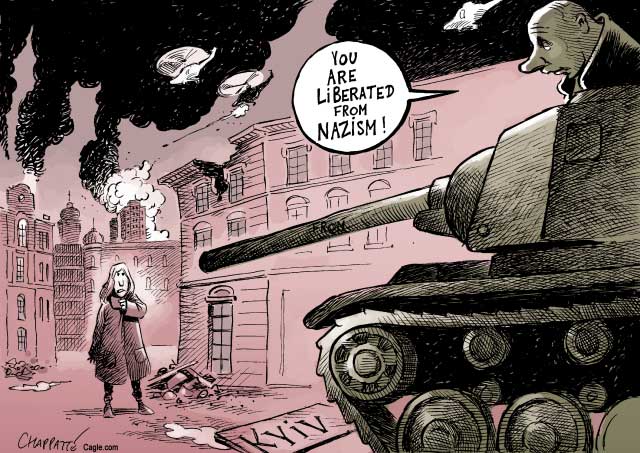
A seismic shift has taken place in Finland in the two months since Vladimir Putin ordered Russian troops and tanks across the border into Ukraine.
The small Nordic country shares a 1,300-kilometre border with Russia and has long been wary of provoking its powerful neighbour to the east.
Finland, like Ukraine, is not a member of the North Atlantic Treaty Organisation (NATO) despite maintaining close defence cooperation with the organisation.
 Instead, the country is officially non-aligned militarily and has steadfastly maintained its independence for decades.
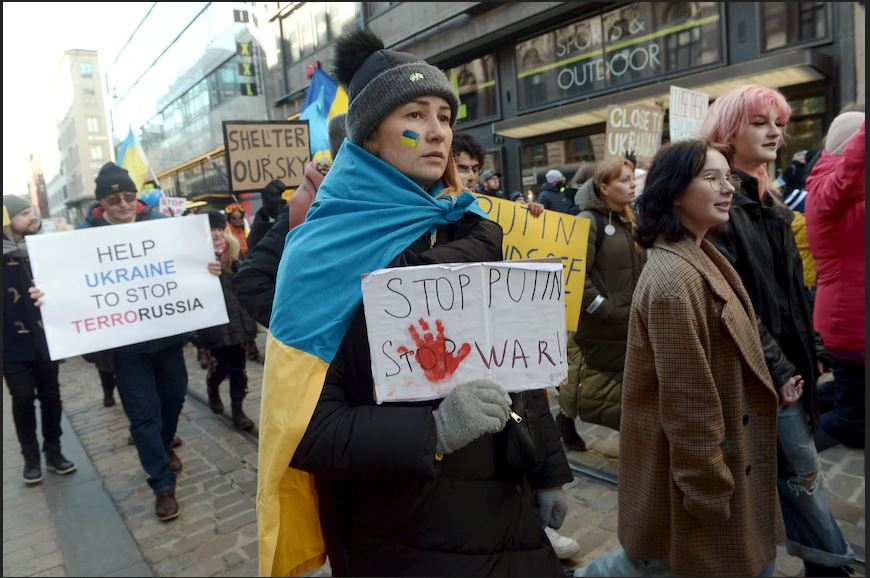
But as Russian troops have besieged cities, bombed hospitals and allegedly committed war crimes against Ukraine, internal support for Finland’s current security position has dramatically changed.
Rather than being cowed by Putin’s aggression, the invasion has driven the Nordic country into the warm embrace of NATO.
Henri Vanhanen, a foreign policy adviser for the national coalition party in Finland, has watched the “rapid change” unfold in his country over the last few months.
He describes Finland’s possible NATO membership as “significant and exceptional”.
“We have reached a now-or-never point in Finland. We see a potentially more isolated and aggressive Russia … and I think, therefore, as the security situation in Europe develops, we also have to evolve our deterrence and also our security,” he told the ABC.
Finland is not alone in considering an extraordinary change to its alliance. Sweden’s ruling party is also debating whether the country should join NATO after the invasion of Ukraine.
If accepted, the addition of both nations into NATO could prove to be one of the biggest strategic consequences of the war in Ukraine.
It could also deliver a significant blow to Putin by potentially bringing the West closer to his doorstep.
How Putin underestimated the EU and NATO
 Vladimir Putin made a “strategic mistake” in his assessment of the military campaign in Ukraine, according to Pierre Morcos, a visiting fellow with the Center for Strategic and International Studies.
“Putin clearly expected that his invasion of Ukraine would divide the West and actually implode from within the EU and NATO,” he told the ABC.
“He expected a weak response from both organisations. [What he got] was quite the opposite and [he] clearly did not expect that Finland and Sweden would make the decision that they would be a better fit to join the alliance.”
Finnish Prime Minister Sanna Marin recently announced that her country will decide whether to apply to join NATO “within weeks”.
Swedish newspaper Svenska Dagbladet reported earlier this month that leader Magdalena Andersson was aiming to apply for membership in time for a NATO summit in late June.
It’s a rather sharp turnaround from before the war, when there was little possibility of either country joining the western military alliance.
Polling on NATO membership in both countries was stable for decades, with a clear majority opposed to signing on.
Now, surveys show approximately 68 per cent of respondents in Finland are in favour of joining NATO. Support in Sweden is lower but still growing, with 57 per cent of Swedes favouring membership, rising from 51 per cent in March.
If both countries were to join NATO, Mr Morcos says, this would “change the security balance in the region”.
Finland’s membership alone would almost double NATO’s common border with Russia, from 1,233km to 2,533km.
Part of Putin’s reason for invading Ukraine was to prevent the country from signing on to the alliance.
But rather than weakening NATO with a ruthless war, the Russian leader may have only hastened its expansion.
“Clearly, this was a mistake in terms of calculation and expectations coming from Vladimir Putin,” Mr Morcos said.
Finland’s testy relationship with its neighbour
Finland has a long and complicated history with its unpredictable neighbour, which resulted in its current non-aligned status.
After more than a century in the Russian Empire, it officially declared independence in 1917.
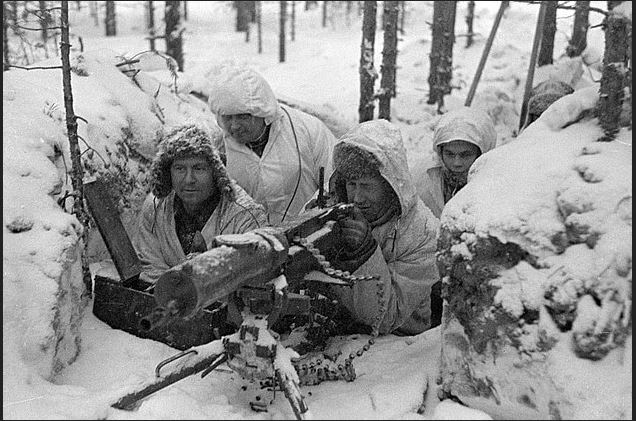 But almost 20 years later, as most countries were engrossed in WWII, the Soviets saw an opportunity and invaded. The brutal campaign became known as the Winter War.
Despite being outgunned, Finland managed to stymie Russia’s attack and prevent a full-scale invasion until a treaty was signed in 1940. Finland ceded some of its borderland to its eastern neighbour as part of the conditions for peace.
In an effort to further placate Russia, the northern European country also adapted its policies to suit the Soviet Union, while remaining officially neutral, during the Cold War.
Western scholars have described this phenomenon with the somewhat derisive term “Finlandisation”. However, once the Soviet Union collapsed, Finland abandoned its neutrality in favour of joining the European Union in 1995.
“It remained militarily non-aligned, in a sense, perhaps [because of its] legacy of trying not to inflame Russia, on its border,” says Katharine AM Wright, a senior lecturer in international politics at Newcastle University.
Even so, Finland has maintained close ties with Europe and intensified joint exercises with NATO after the annexation of Crimea in 2014.
Now the invasion of Ukraine has prompted many to consider taking the next step of joining the alliance.
“I think for both people in Finland and also people in Sweden, the Russian invasion of Ukraine has been felt particularly personally, and it’s made it seem more kind of real that something similar could happen to them,” Ms Wright said.
This is a particular concern for locals who live in the country’s border towns.
“I am a bit fearful. I live two, three kilometres from here, in the first apartment buildings that you face when coming from their [Russia’s] direction,” Marja-Liisa Kantokivi, who lives in Finland’s border-crossing town of Imatra, told Reuters.
It is these residents who would be on the front line of any possible conflict.
Russia warns of nuclear, hypersonic deployment if Sweden and Finland join NATO